
When Gods Die
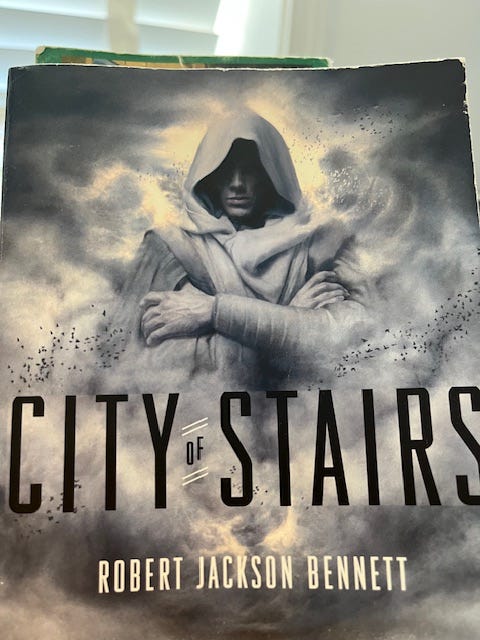
City of Stairs by Robert Jackson Bennett

Robert Jackson Bennett’s 2014 title City of Stairs is set in Bulikov, the seat of a mostly dead pantheon of gods. This crumbling, cold city of the angry, and oppressed huddles under the ruins of forgotten wonders. Like a Maurits Cornelis Escher painting, the city’s architecture exists in a fulcrum of deep weirdness. The conquering nation of Saypur murdered their gods and nothing was ever the same, starting with reality.
If you are looking for a book about Epistemological shock, this world is a fun place to start. What we are looking at here are events so big, they boggle the mind. The rules from before are nothing like the rules after. Think of what it must have been like to live in East Germany after the Berlin wall fell, or in Paris after they beheaded their king, or Tenochtitlan after the Spanish killed Montezuma II. There are certain moments in history when everything changed irrevocably. Laws, customs, knowledge, even languages can change in what feels like the blink of an eye.
Though the book came out in 2014, the topic feels timely now. The United States has a new President that is doing the most to create such an epistemological shift. He wants to change basic tenets of the American system from birthright citizenship to the ideal of an impartial justice department. He wants to change the words we use and the stories we tell and already managed to get Google Maps to replace the Gulf of Mexico with the “Gulf of America,”and the park service to remove the word “trans” from the Stonewall commemorative plaque. It’s disorienting when leaders exert their power on the firmament of language itself. That feeling of confusion and overwhelm is a slice of the epistemological shock at the center of the world building in this book.
City of Stairs has great characters starting with Shara, a whip smart undercover agent sent to Bulikov by the colonial power that killed Bulikov’s gods. Shara is also half in love with studying the remnants of the culture her people destroyed. She knows the lore of the mostly dead gods better than almost anybody. That’s because the divine lore of the Bulikov pantheon is classified information so most of the people who might want to learn the history cannot by force of colonial law. Historians need an ironclad security clearance to know things like how a god was born or what gestures or symbols their followers used to show respect.
Meanwhile, with the help of her secretary and muscle partner Sigrud, Shara begins unravelling a plot that may shake this world to its core again. And the lore she knows of the divine world that came before will help her if she hopes to defeat it. So will Sigrud’s uncanny strength and sixth sense on how to keep her alive. Bulikov is not a safe place for Shara on a thousand levels that will become clear.
Bennett also complicates the categories of colonialism in ways that make oppression and victimhood like an Escher circle of endless stairs. Shara is an agent of Saypur, the Colonial power that has pressed Bulikov under its heel for decades. They extract resources and wealth and make it illegal for residents to learn their own history. But Saypur only attacked Bulikov and its Gods because Bulikov had colonized Saypur brutally first. Saypur rebelled in search of liberation, safety and justice and then they became the new oppressors. They toppled gods and took lands. Neat categories of victim and perpetrator fall apart in this world and the question isn’t who was at fault but where one can go from here. The historic sweep of Bennett’s world building makes the story feel solid, grounded and real. It also helps you like Shara as she uncovers dangerous plots from both Saypur and Bulikov.
Action drives this book and turns those pages. You can almost miss how thoughtful the world building is in the suspense of another fight scene. It’s a spy story set in a fantasy world complete with murder investigations, conspiracies, double crossings and classified secrets. Not everything is as it seems even before you find the Escher staircases. Finding out what’s happening underneath the surface is part of the enchantment this book works.
It’s a fun book with an important truth at its core. Sometimes people kill gods. Nations no longer believe in Zeus, the divine right of kings or the historical dialectic leading to communism to name a few examples. They all sound downright silly now, yet millions once organized themselves around those ideas and stories. The aftermath of such moments are never easy.